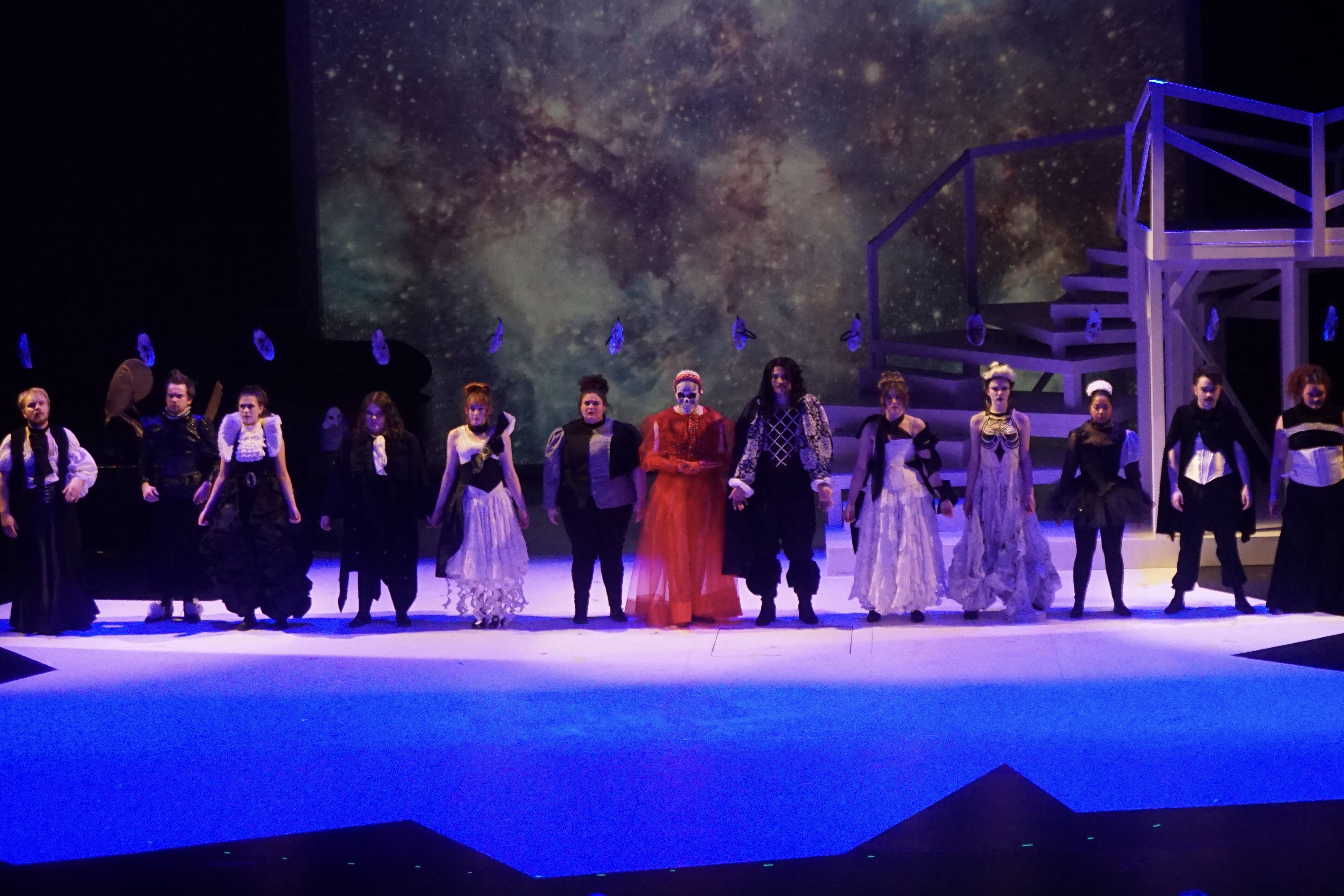
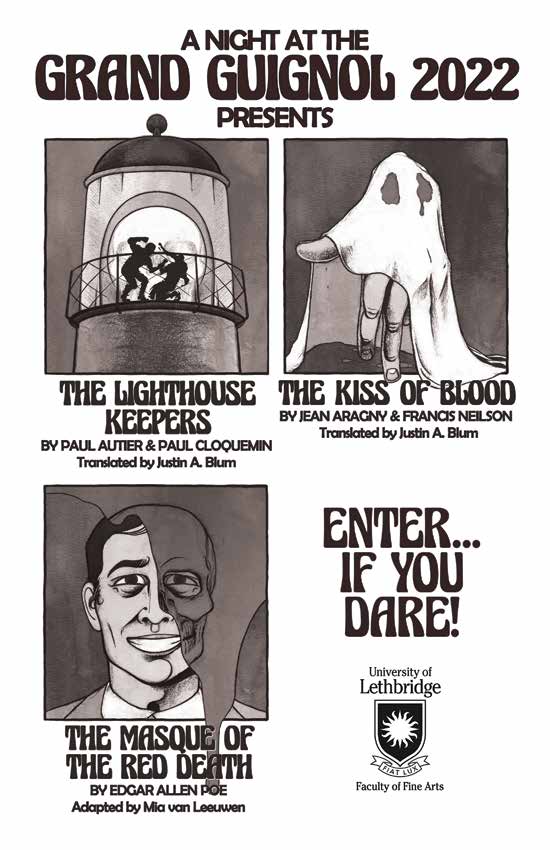
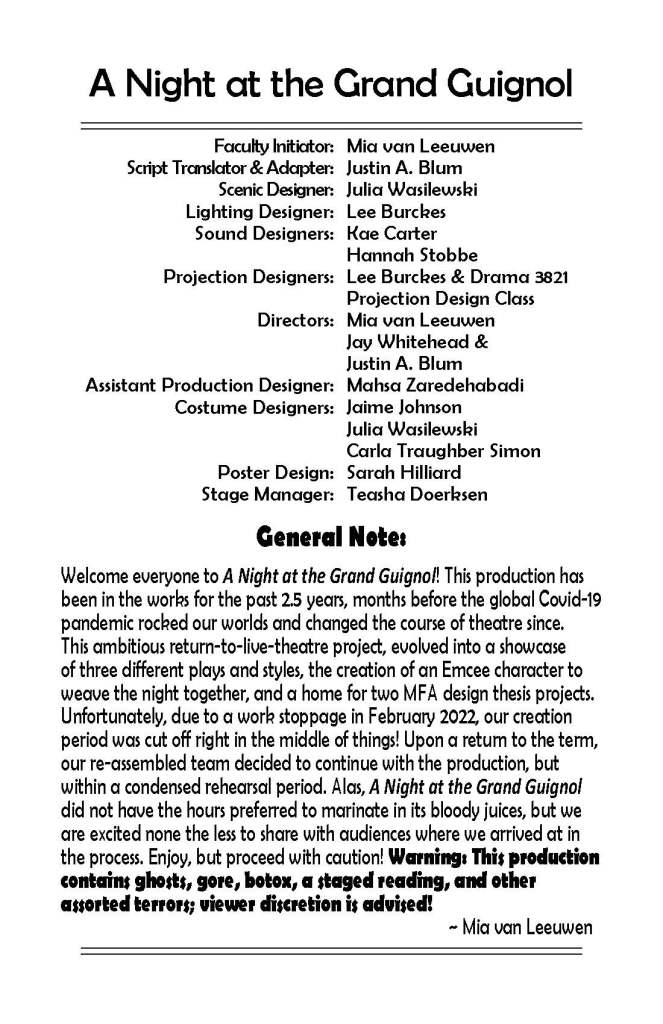
Welcome to A Night at the Grand Guignol! Initiated by Mia van Leeuwen, this University of Lethbridge production was in the works many months before the global Covid-19 pandemic rocked our worlds and changed the course of theatre since. This ambitious return-to-live-theatre project evolved into a showcase of three different plays and styles, the creation of an Emcee character to suture the plays together, and a home for two MFA design thesis projects. Enjoy, but proceed with caution! Warning: This production contains ghosts, gore, botox, a staged reading, and other assorted terrors; viewer discretion is advised! See full program below.
production images photographed by Julia Wasilewski
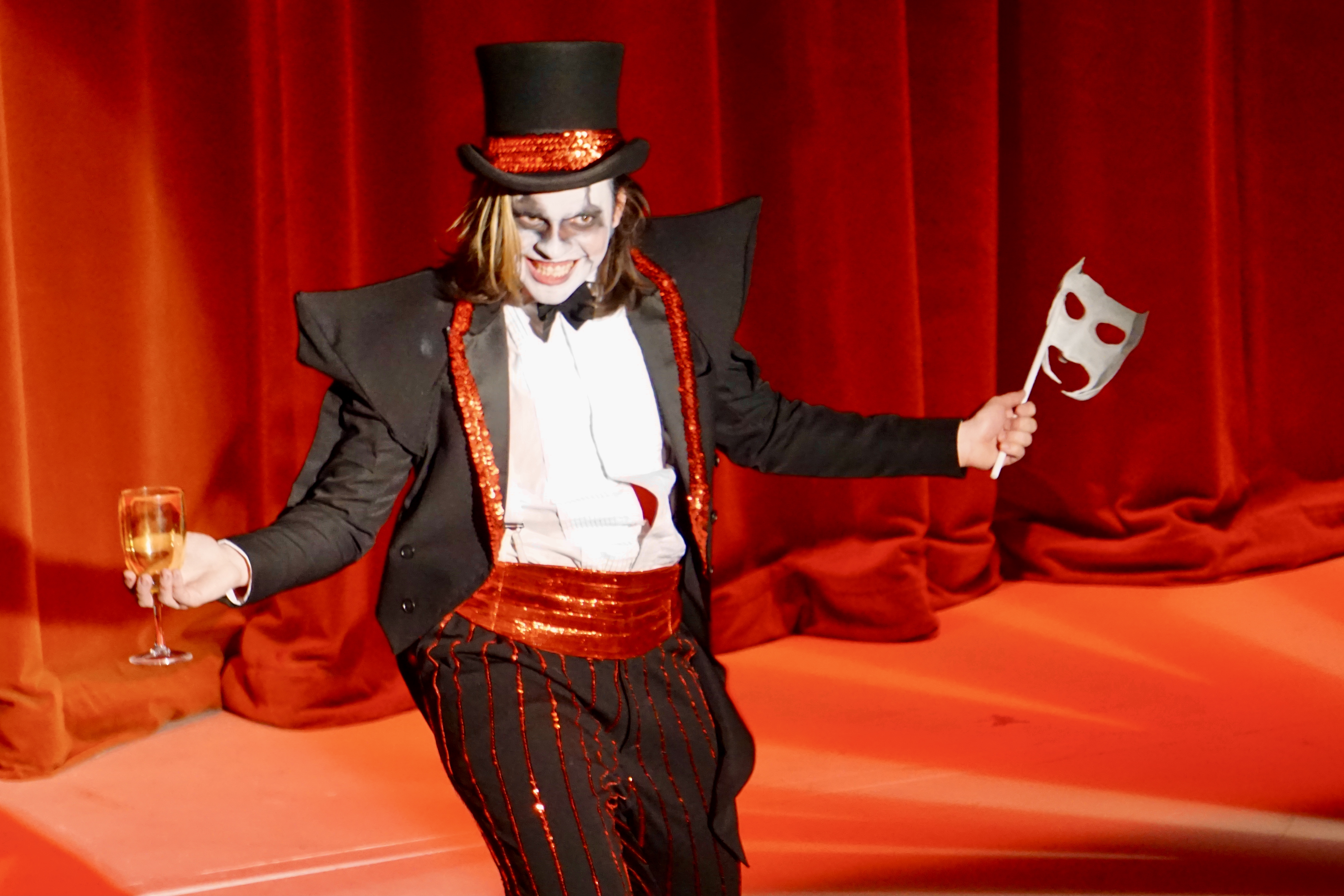
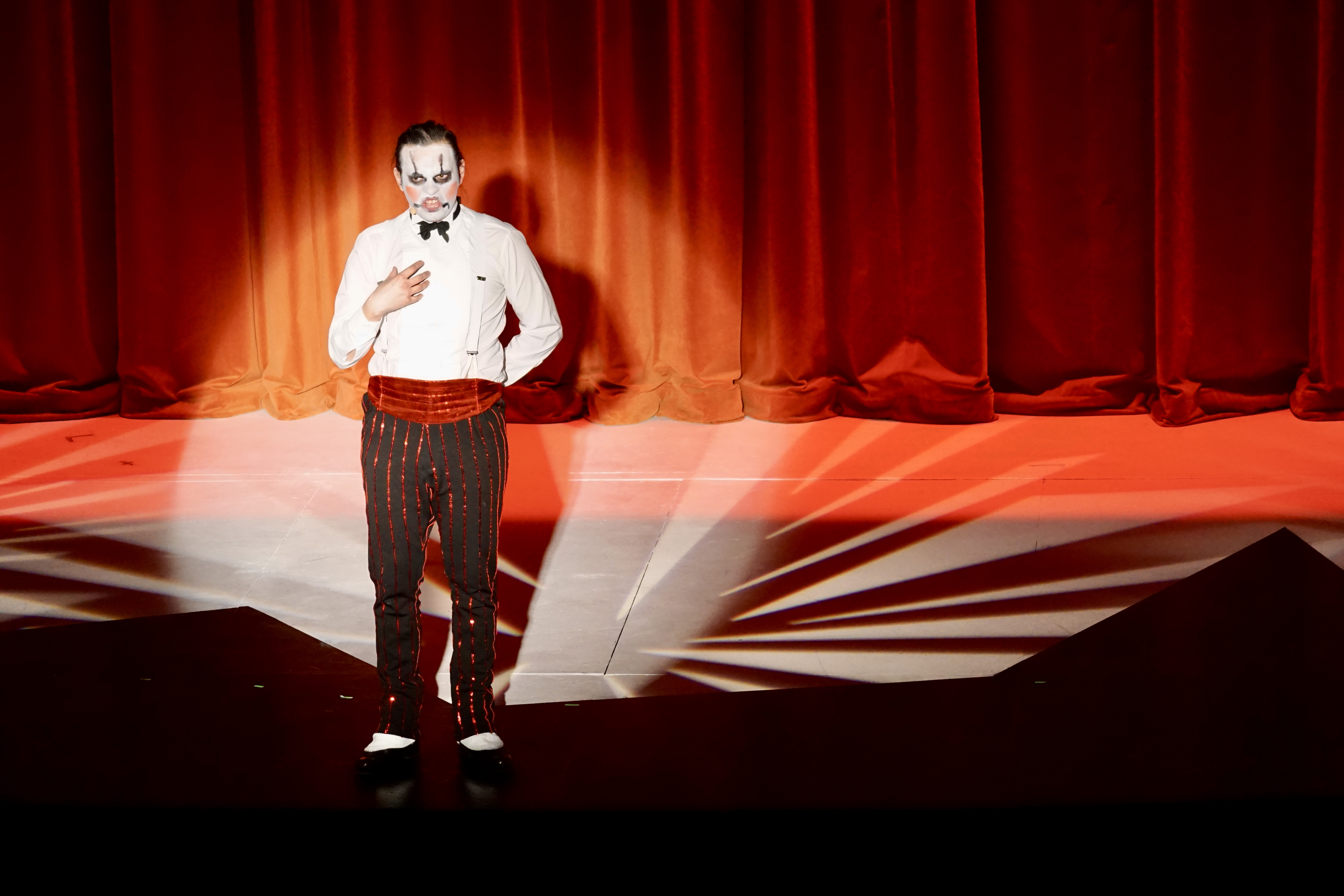
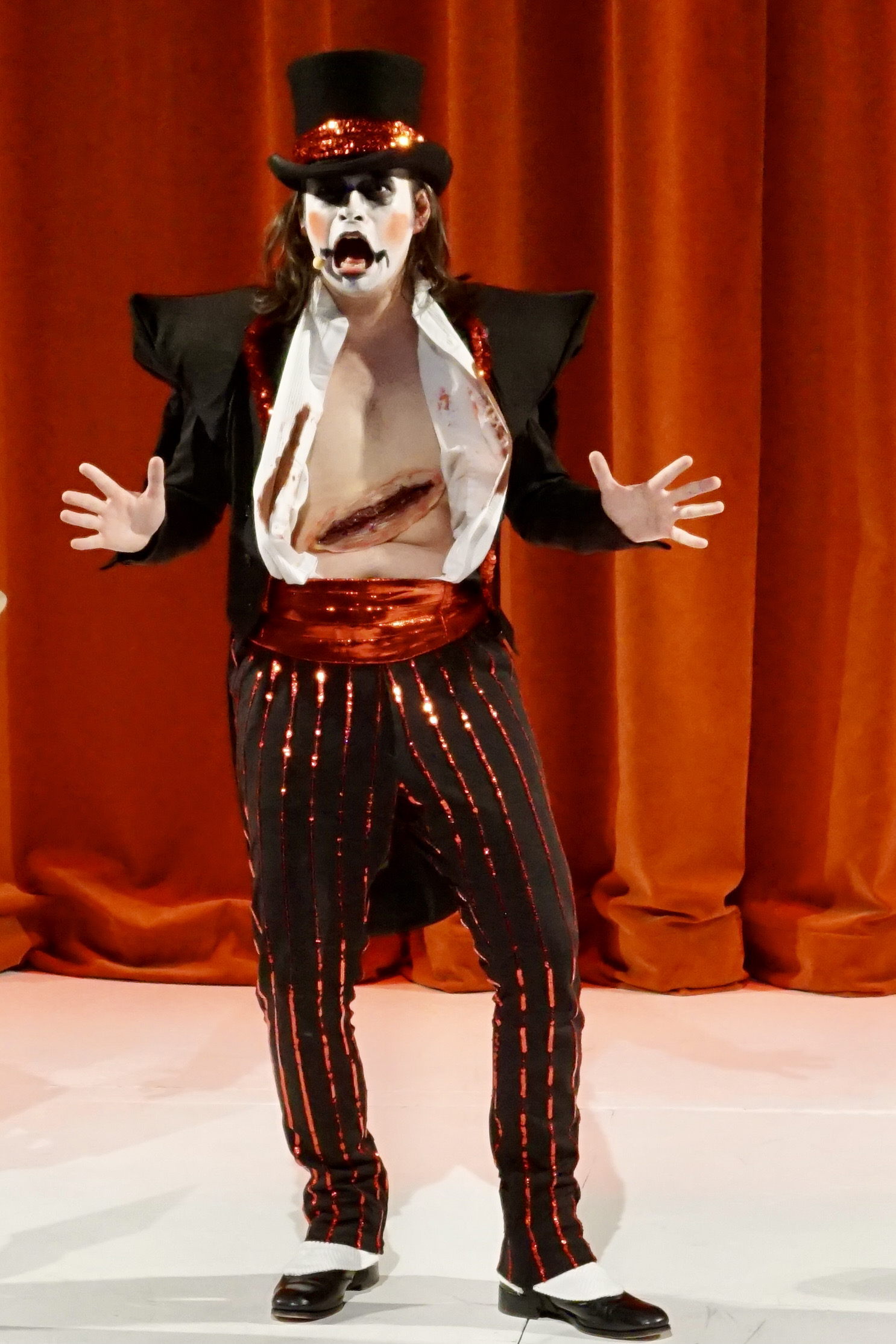


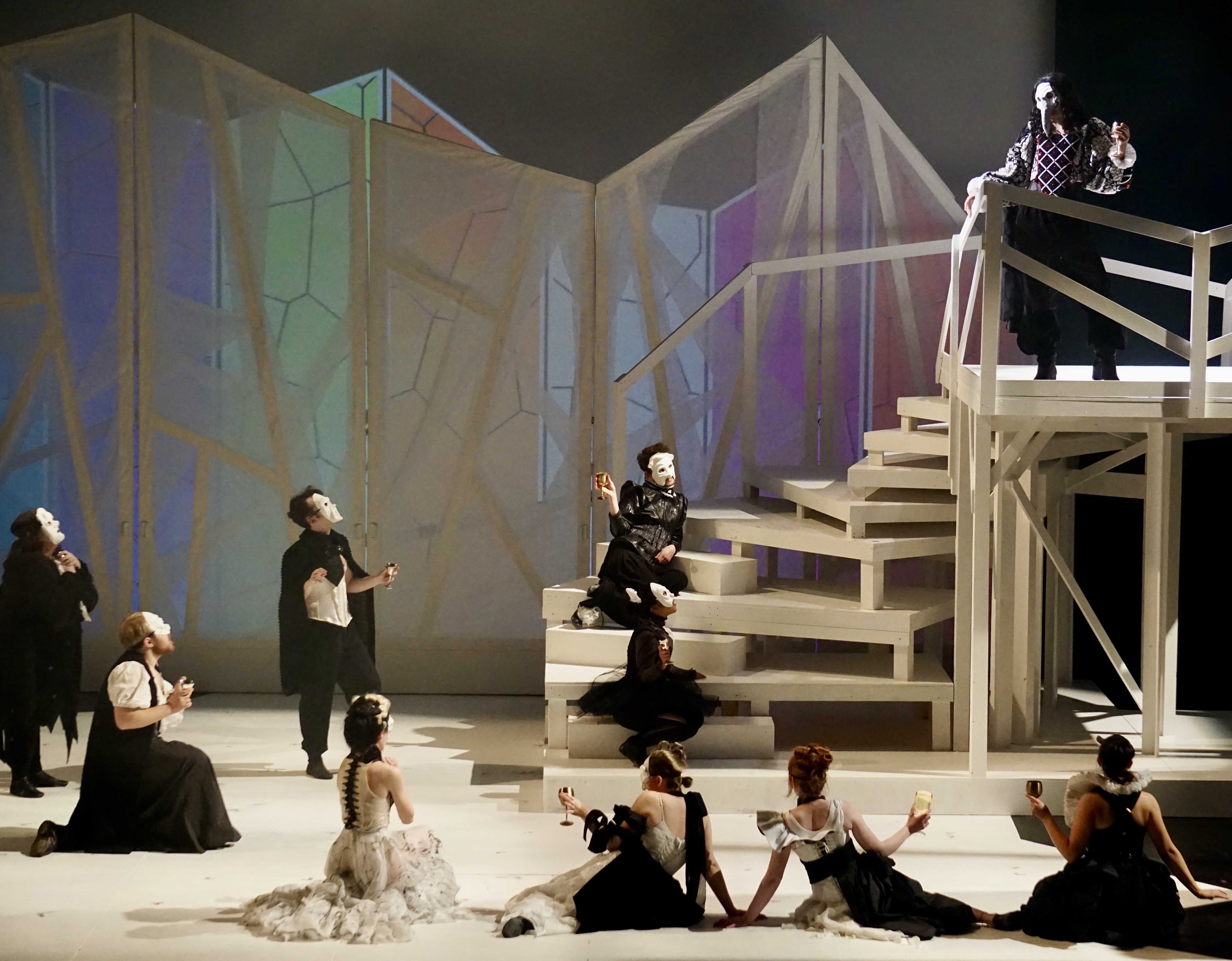
Masque of the Red Death
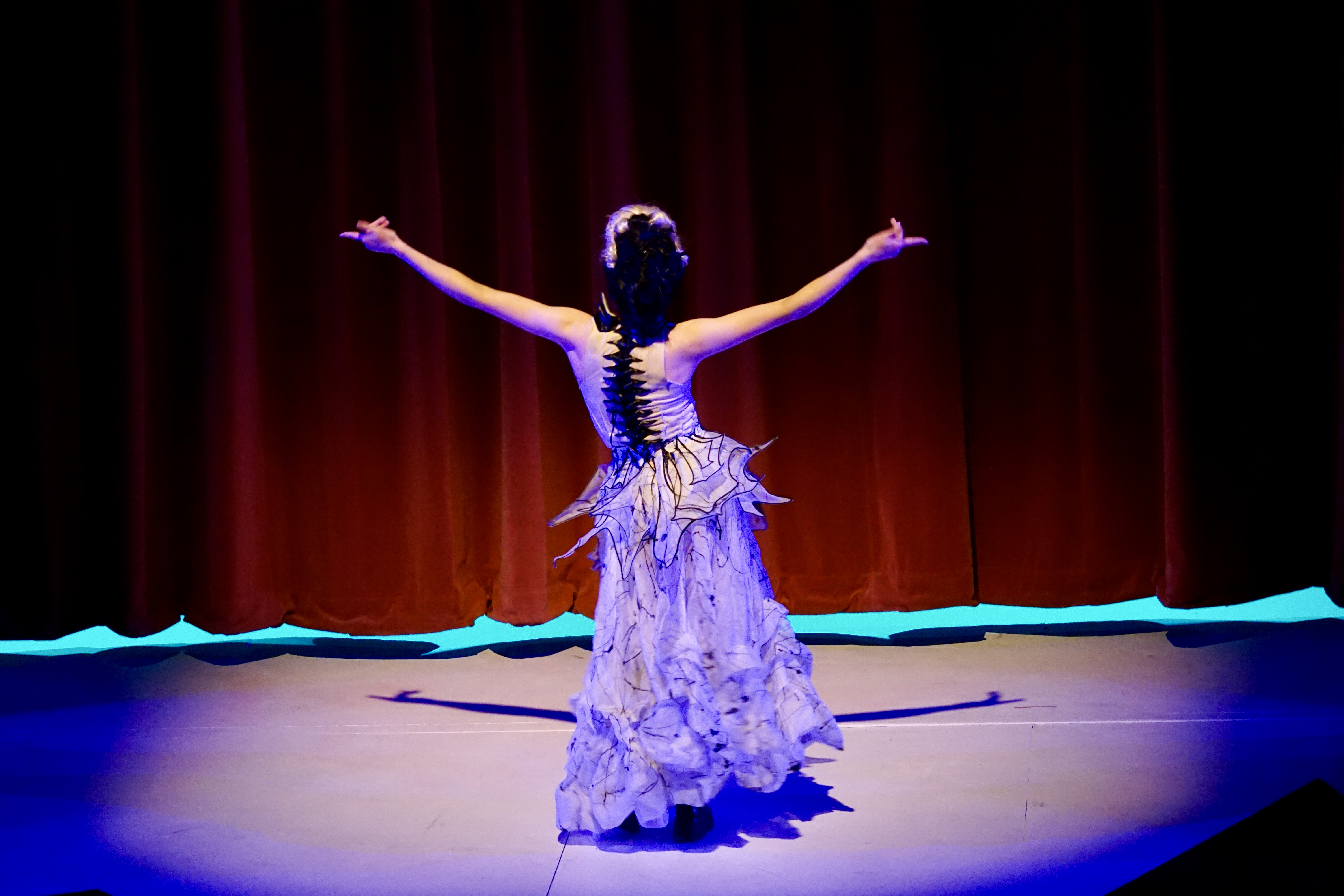
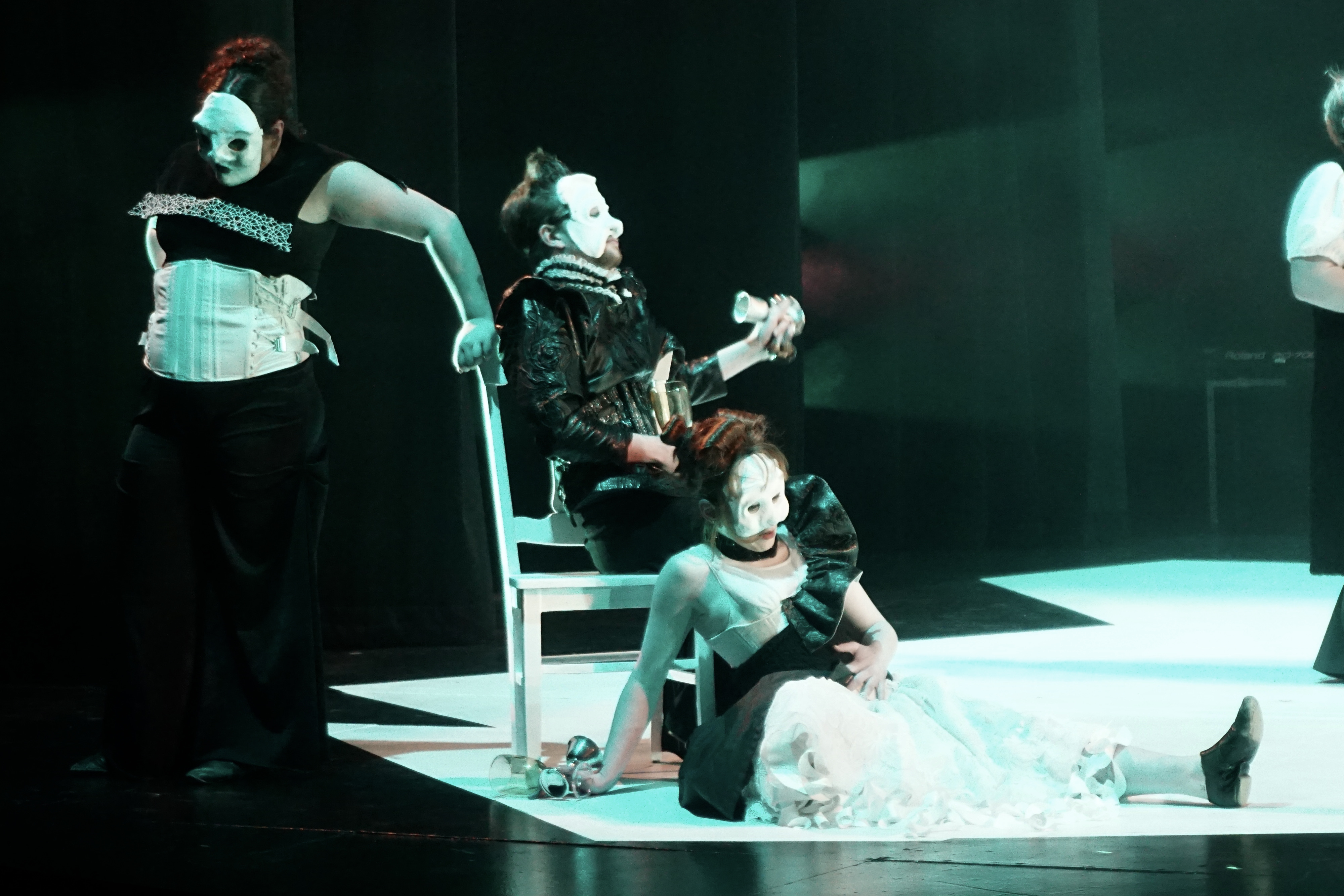
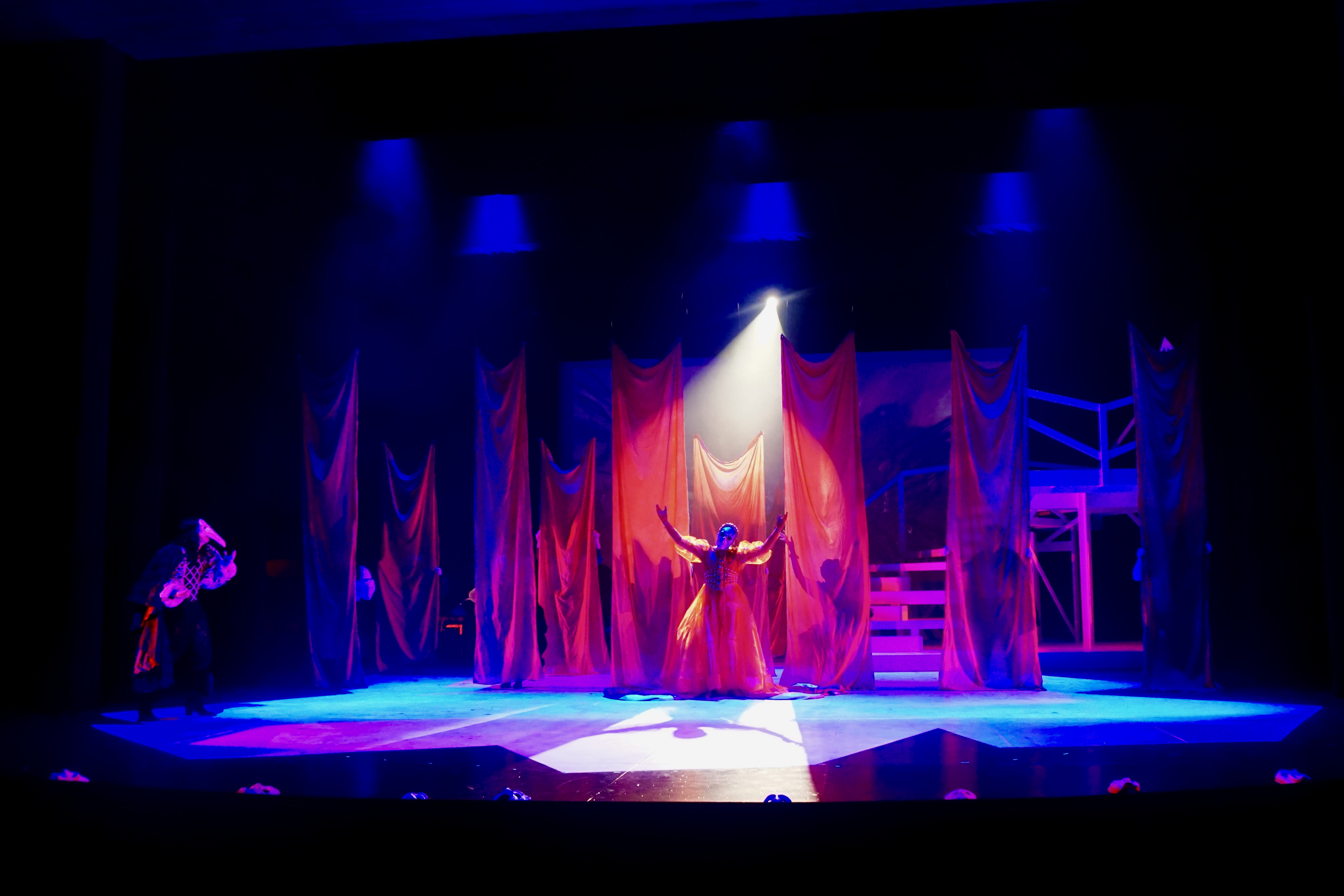
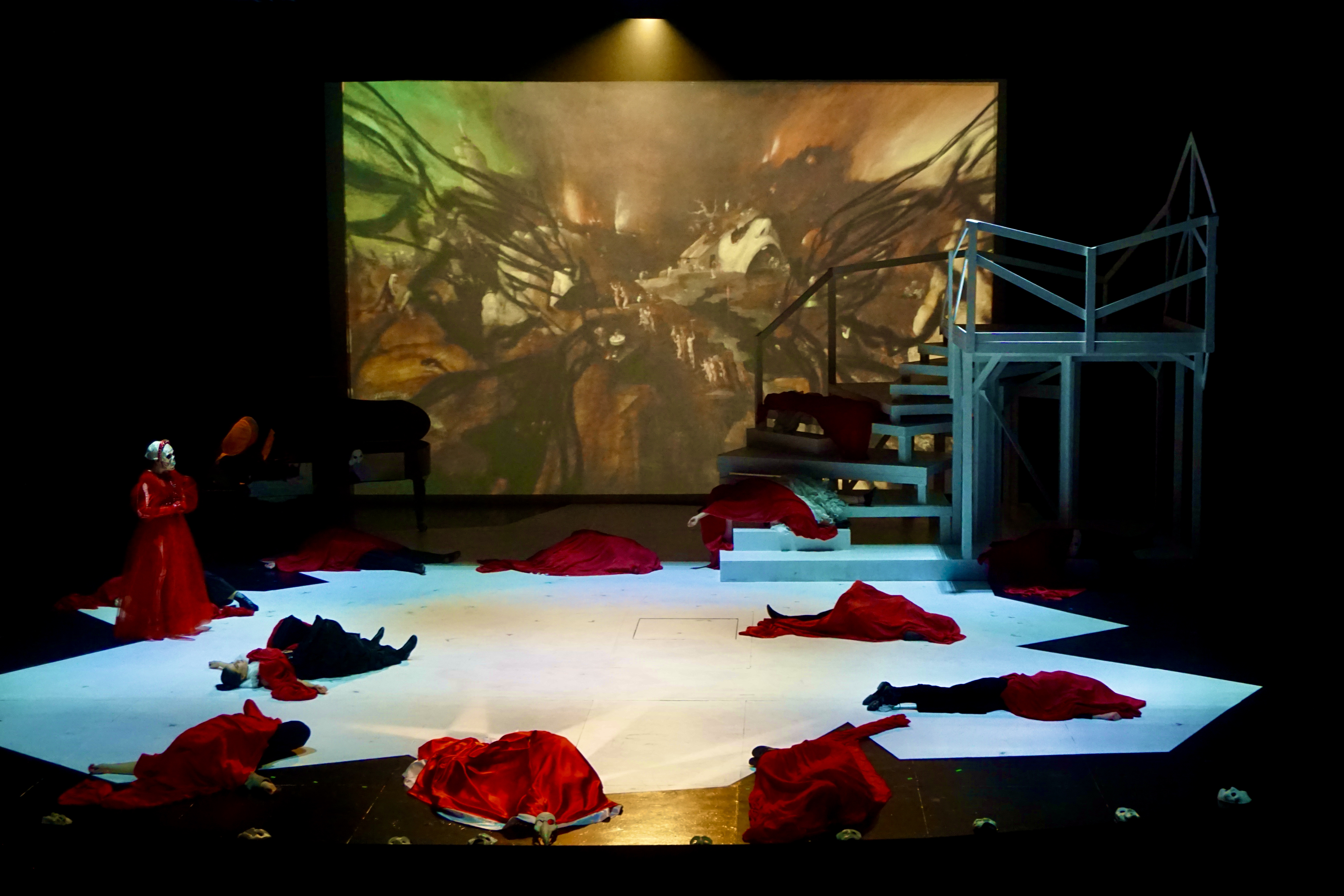
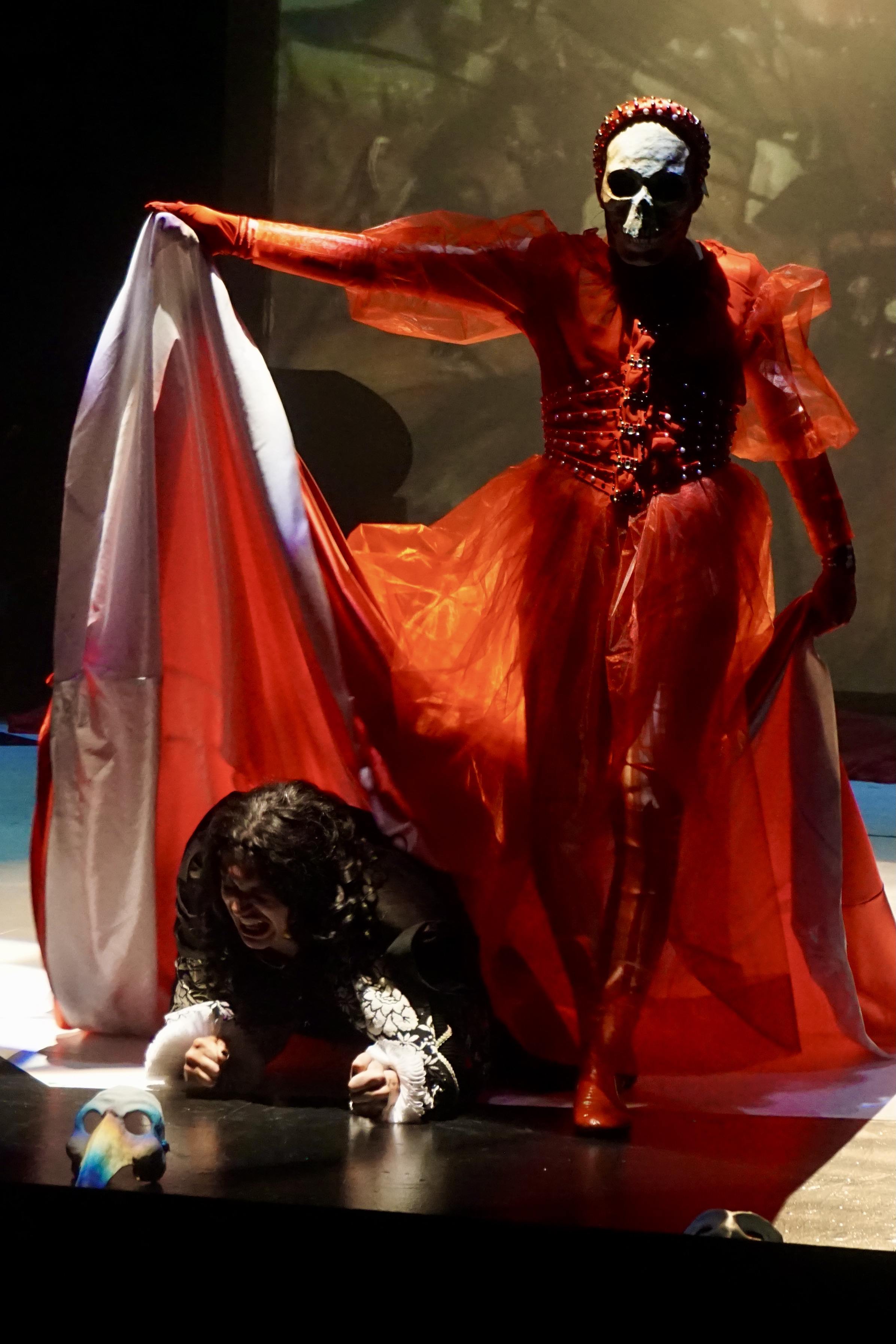
I chose to work with Grand Guignol muse Edgar Allan Poe and his short story “The Masque of the Red Death” — a cautionary tale that features a fictitious plague, months before our global pandemic hit. Admittedly, I had some reservations about going ahead with this retelling, but instead saw this as a moment to look death in its face — through art. I proposed Grand Guignol for the Main Stage season in the first place because of its 6-decade long dance with death through multiple plays, styles of telling, and innovation of special effects. As my research explores contemporary approaches to memento mori — artistic practices that remind us that death is coming for everyone — I view the work of the Grand Guignol as an important and fascinating chapter in theatre history, one that captured a time when confronting the horrality of it all appeared to be a productive part of society. Fast forward to 2022, as we moved through this next stage of the pandemic, I suspect that many audiences and artists will crave lighter, easier, less terror-filled and more feel-good amusements. Regardless, death and the darker sides of life won’t be going away anytime soon; ART is a bridge to confront and express all aspects of existing in this remarkable world. ~ Mia van Leeuwen, March 2022








Kiss of Blood
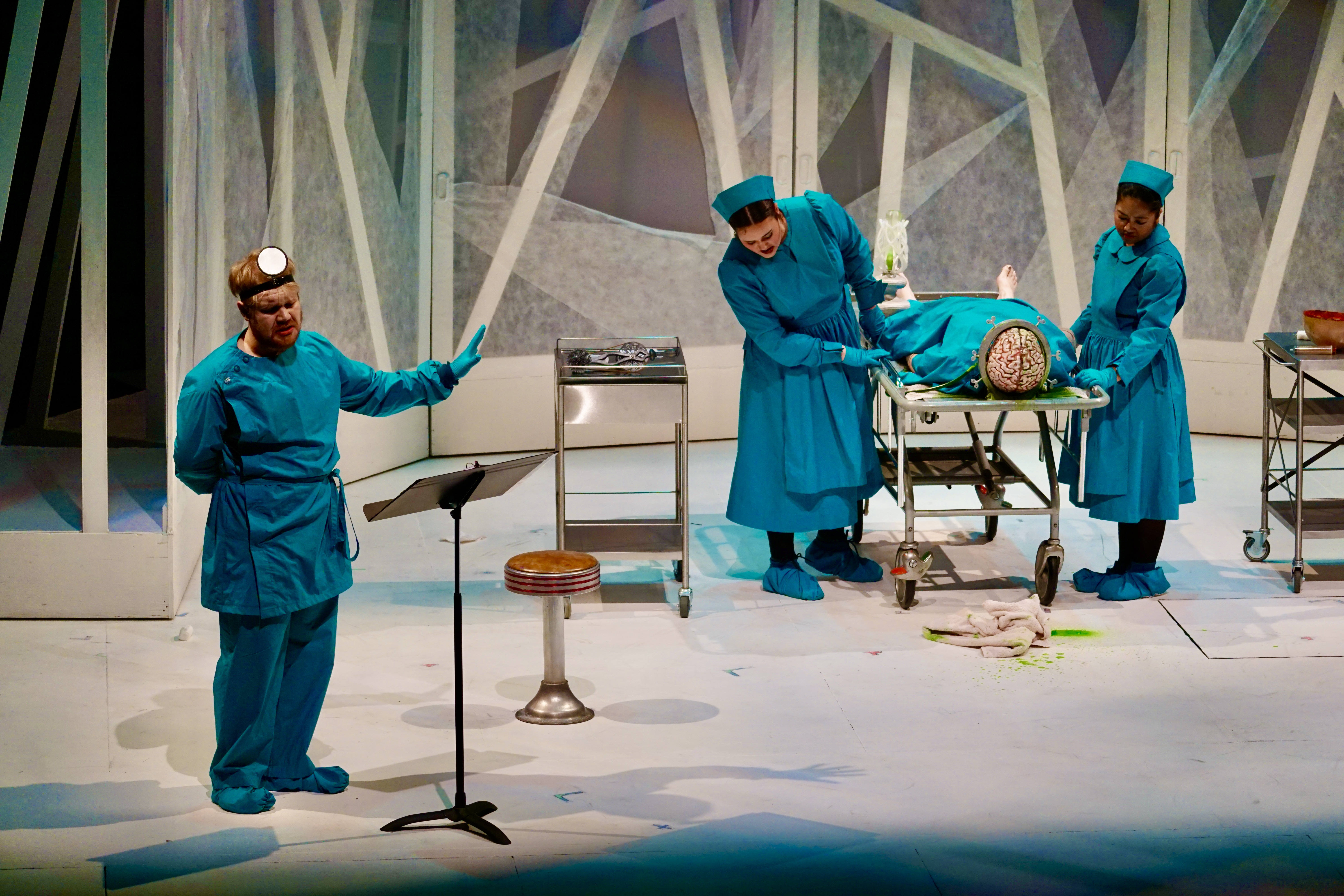
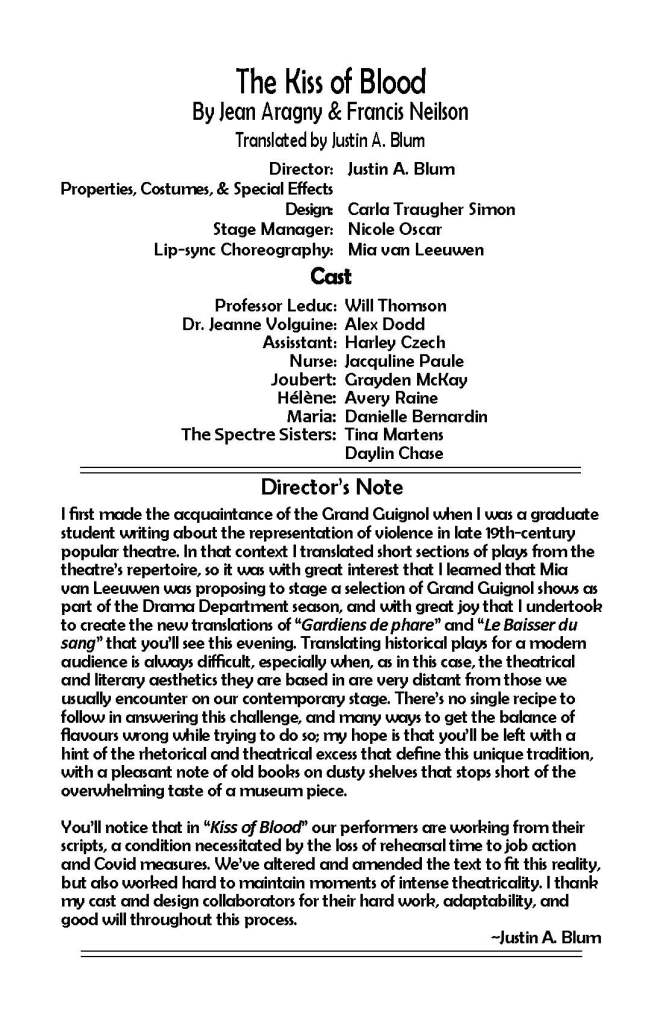
I first made the acquaintance of the Grand Guignol when I was a graduate student writing about the representation of violence in late 19th-century popular theatre. In that context I translated short sections of plays from the theatre’s repertoire, so it was with great interest that I learned that Mia van Leeuwen was proposing to stage a selection of Grand Guignol shows as part of the Drama Department season, and with great joy that I undertook to create the new translations of “Gardiens de phare” and “Le Baisser du sang” that you’ll see this evening. Translating historical plays for a modern audience is always difficult, especially when, as in this case, the theatrical and literary aesthetics they are based in are very distant from those we usually encounter on our contemporary stage. There’s no single recipe to follow in answering this challenge, and many ways to get the balance of flavours wrong while trying to do so; my hope is that you’ll be left with a hint of the rhetorical and theatrical excess that define this unique tradition, with a pleasant note of old books on dusty shelves that stops short of the overwhelming taste of a museum piece. ~Dr. Justin Blum, March 2022




Lighthouse Keepers
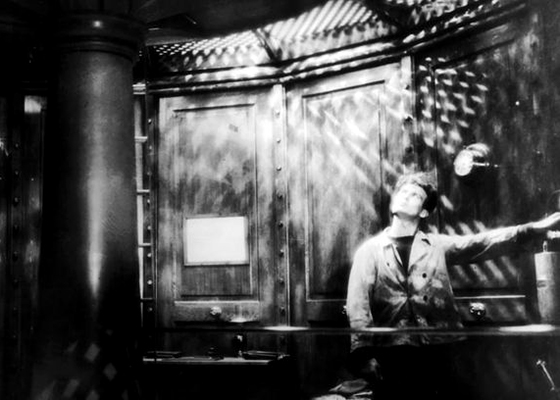
by Jean Grémillon, 1929
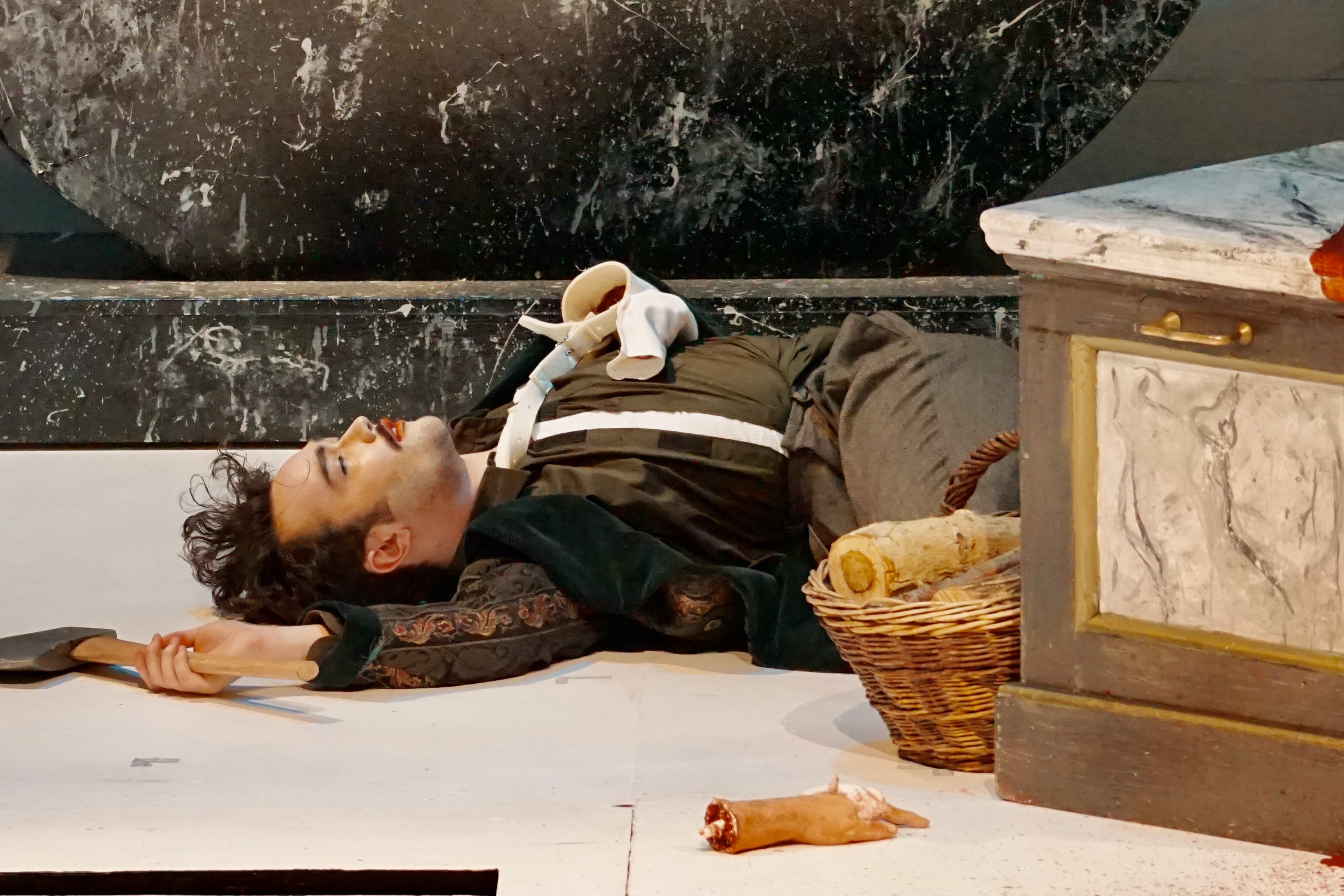
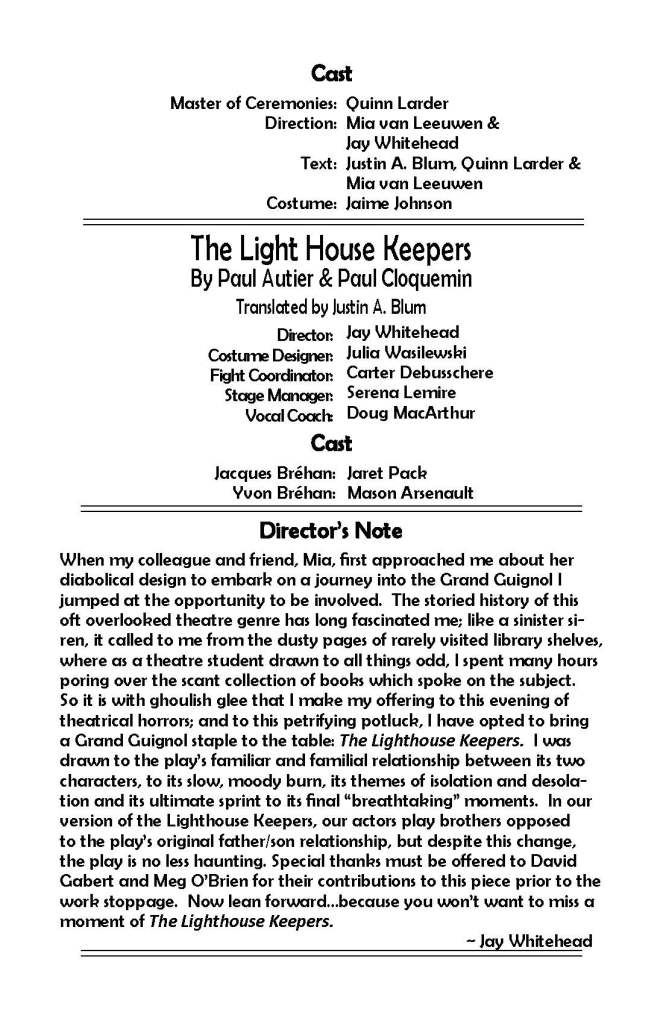
When my colleague and friend, Mia, first approached me about her diabolical design to embark on a journey into the Grand Guignol I jumped at the opportunity to be involved. The storied history of this oft overlooked theatre genre has long fascinated me; like a sinister siren, it called to me from the dusty pages of rarely visited library shelves, where as a theatre student drawn to all things odd, I spent many hours poring over the scant collection of books which spoke on the subject. So it is with ghoulish glee that I make my offering to this evening of theatrical horrors; and to this petrifying potluck, I have opted to bring a Grand Guignol staple to the table: The Lighthouse Keepers. I was drawn to the play’s familiar and familial relationship between its two characters, to its slow, moody burn, its themes of isolation and desolation and its ultimate sprint to its final “breathtaking” moments. In our version of the Lighthouse Keepers, our actors play brothers opposed to the play’s original father/son relationship, but despite this change, the play is no less haunting. Special thanks must be offered to David Gabert and Meg O’Brien for their contributions to this piece prior to the work stoppage. Now lean forward…because you won’t want to miss a moment of The Lighthouse Keepers. – Jay Whitehead, March 2022




 Mia Star van Leeuwen